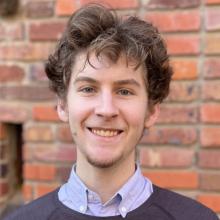
William Shy is a 2nd year Nuclear Engineering student exploring advanced nuclear energy, thermal-fluid science, and artificial intelligence to develop a heat-pipe facility for next generation microreactors. He uses fiber-optic sensing, thermal-hydraulic testing, modeling, and AI-assisted operations to improve the safety performance of heat-pipe-cooled microreactors. These power sources would be safe, versatile, and deployable for a variety of situations, including for disaster relief, manufacturing plants, or for remote and isolated communities. “This work is exciting both for the complex physics that govern heat pipes and for its applications in nuclear power, which is becoming increasingly important as energy needs rise,” says William, “Small modular reactors or microreactors offer a practical pathway to replace aging fossil fuel plants with clean energy.”
William began his academic career at Mississippi State as a Chemical Engineering student to study advanced science in renewable energy for the purpose of addressing climate change. During his free time, he was active in Students for a Sustainable Campus; recycling refuse after large events, participating in the Climate March, and volunteering for Earth Day activities. Communicating the importance of planet stewardship to the largest audience possible is integral to William’s commitment. He enthusiastically participated in the Model UN, where his paper on preventing the weaponization of outer space and environmental degradation during times of war earned first-place.
Academically, William worked in multiple labs on three different projects primarily related to organic chemistry and the properties of organometallic compounds. This work led to contributions to two publications and a presentation at the MSU Research Symposium. He shares a story of one formative experience: “In undergraduate organic chemistry classes, we predicted reaction products that were magically pure and easily separable. During my time in the research lab, I have learned how far from the truth those predictions were,” explains William. “I have set up reactions that take only a few minutes, only to spend months trying to separate the product from the starting material and impurities. I have learned that challenges like these are an intrinsic part of science and research, and I have learned to embrace these challenges as a way to adapt to unpredictable results.” After learning about isotopic abundance in general chemistry, he began thinking about which elements would make good moderators based on their average atomic weight. Desiring to delve further into the nuclear side of chemistry, William was accepted to participate in the highly coveted experience of Nuclear Chemistry Summer School at Brookhaven National Laboratory. Here he received a crash course in the fundamentals of radiochemistry and confirmed a desire to pursue a graduate degree in Nuclear Engineering. RPI was a natural choice as William appreciated our breadth of nuclear engineering research, the cross-disciplinary collaborations, and the robust connections to other universities and laboratories across the country. “I like nuclear engineering because it ties together principles from many fields like mechanical engineering, chemical engineering, and chemistry, and I value this overlap.”
Currently, William is supported through RPI on an NRC fellowship and is an integral part of the N-Phase Lab led by Dr. Shanbin Shi. Using the Low-Temperature Heat Pipe Test Facility (LTHPF), he has performed numerous experiments on heat pipes, which use evaporation and condensation for highly efficient heat transfer. With internal temperature and pressure measurements, William is working to fully characterize the heat transfer mechanisms, which will inform computational models as well as future studies with different working fluids.
In addition to his experimental research, William has developed computational fluid dynamics (CFD) models to investigate liquid metal flow and heat transfer in liquid-metal-cooled fast reactors. These state-of-the-art simulations are essential for accurately predicting core heat removal during both normal operation and postulated accident scenarios. His work contributes to a deeper understanding of thermal-hydraulic behavior in advanced reactors and supports the development and optimization of passive safety systems, particularly for sodium-cooled fast reactors.
After graduation, William plans to work at a national lab researching nuclear thermal hydraulics, where he hopes to perform experiments on liquid-metal coolants to increase the technological readiness and improve the safety features of advanced reactors. This will make nuclear power more economically competitive with other means of energy production.
In his free time, William loves to brew coffee, especially pour over and espresso. “It is extremely rewarding to properly dial in a new batch of coffee by tweaking each variable, and the more time I put into it, the more details I discover that affect the final product, from brew temperature to water chemistry.”