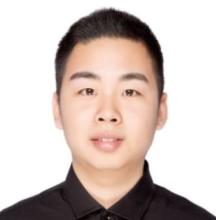
Ling Yue, computer science PhD student, is developing AI systems that can automatically solve complex scientific problems like predicting which patients will succeed in clinical trials and automating sophisticated physics simulations. These projects excite him because they combine cutting-edge artificial intelligence with real-world applications that may accelerate scientific discovery, improve patient care, and advance research to benefit scientists, healthcare providers, and ultimately patients worldwide. Ling has made an impact with AI in multiple fields across multiple countries, all before completing his second year of the PhD program.
As a visiting researcher at Tsinghua University, Ling contributed significantly to the biomedical field with EmerGNN, which pioneered drug-drug interaction prediction for emerging drugs by leveraging rich information in biomedical networks. The method enables accurate predictions even when limited known interaction data exists for new drugs. Published in Nature Computational Science, his article has achieved 59 citations to date (October, 2025). Additionally, he developed RelEns, published at EMNLP, which advanced knowledge graph embedding through relation-aware ensemble learning techniques.
During his time as an invited intern at Microsoft Research Asia, Ling organized Global AutoML competitions at multiple conferences, further establishing his presence in the international AI research community.
Since arriving at RPI as part of the AI for Science initiative, Ling has expanded his research to accelerate scientific discovery across multiple domains. He developed TrialEnroll, a tool for improving clinical trial enrollment success, and integrated it into ClinicalAgent, a comprehensive multi-agent system that enhances clinical trial outcome prediction and provides precise trial duration estimates. ClinicalAgent has already garnered 32 citations in less than a year and significantly outperforms current LLMs by adding new functions such as predictive analytics and comprehensive failure analysis.
Pivoting to an entirely different application for AI, Ling is currently working on Foam-Agent, an open-source framework for Computational Fluid Dynamics simulations that significantly outperform previous simulation tools. With an 83.6% success rate compared to 37-55% for existing frameworks, Foam-Agent's iterative error correction mechanism identifies and resolves simulation failures without human intervention, democratizing access to complex CFD workflows. This DoE supported work is applicable across aerospace, civil engineering, and biomedical engineering fields. Most recently, Ling has pioneered work on Autonomous Scientific Discovery Through Hierarchical AI Scientist Systems, developing frameworks where AI scientists can enhance their own capabilities through the knowledge they generate, establishing a new paradigm for autonomous scientific research.
The opportunity to apply his work in such diverse fields is the reason Ling chose RPI. "I was attracted to RPI's Computer Science department because of its strong support for interdisciplinary AI research and the opportunity to work on cutting-edge applications of artificial intelligence to address complex scientific problems across multiple domains," he states. RPI's inspiring slogan, "Why not change the world?", perfectly embodies his vision of using AI to accelerate scientific discovery across disciplines. Indeed, advisor Shaowu Pan, finds Ling to be, "highly passionate about his research and genuinely interested in collaborating with others across disciplines."
"Ling represents the kind of highly productive and innovative graduate student who pushes the boundaries of interdisciplinary AI research while maintaining exceptional academic progress that typically takes much longer to achieve," said Shaowu Pan, his advisor on the Foam-Agent project. In just his first two years at RPI, Ling has achieved remarkable productivity with 5 first-authored papers and 156 citations, demonstrating his significant impact in the research community. Collaborating with researchers from Stanford, University of Southern California, U.C. San Diego, and IBM Watson Research Center, Ling's impact is appreciated within and well beyond the campus community. "He brings great energy and enthusiasm to his research, and shares his research with others. Ling has been actively collaborating with several of my students, demonstrating not only a strong ability to learn quickly but also impressive mentoring skills. He has successfully advised 8 undergraduate students at RPI," continued Prof. Pan. Ling is passionate about contributing to the RPI community by providing undergraduate students with opportunities to learn research methodologies and gain valuable experiences that will strengthen their backgrounds for future careers or graduate school applications. Ling intends to pursue a career in academia where he will have the access to apply AI across multiple domains, unfettered by the corporate profit driven pursuits that tend to be linear focused. His flexible and creative application of AI across multiple domains will be better facilitated in the university setting.
When he is not participating in NSF I-Corp programs, industry internships, or interdisciplinary research on university campuses, Ling can be found with his wife volunteering at Thatcher State Park, where they engage in plant care activities including watering, tending to various plant species, and preparing plants for sale to support the park. They assist the other older and retired volunteers in maintaining the park's botanical resources and community outreach programs.